
Inicio / 2026 / Declaración de principios
2026 — VOCAL
Declaración de principios
Bienal de Yucatán 2026. Dirección artística de Abraham Cruzvillegas
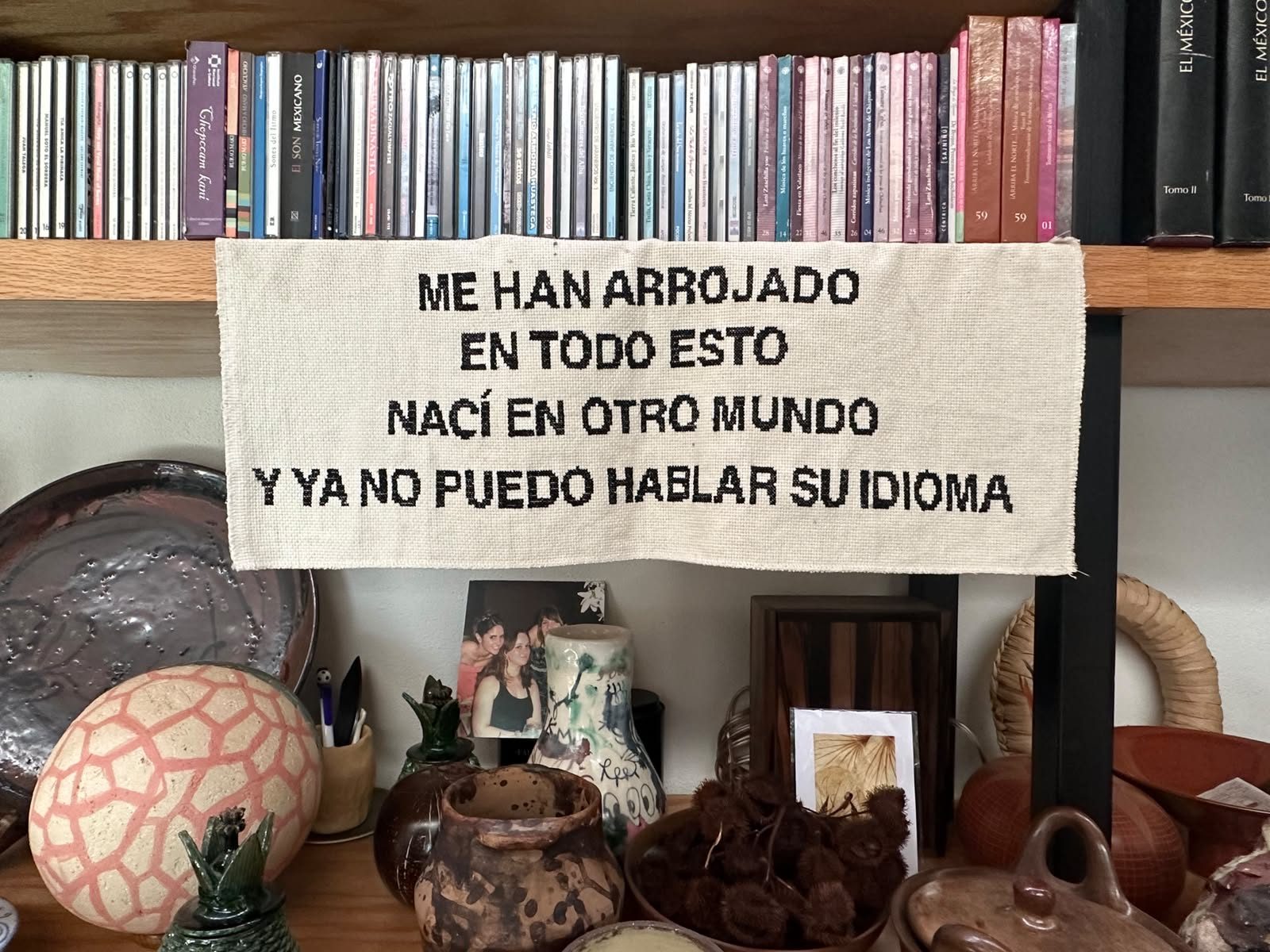
Salvador Xharicata (1996, México)
Nací en otro mundo y ya no puedo hablar su idioma, 2020
Bordado en punto de cruz sobre manta de algodón, hecho por María de los Angeles Sánchez en Cherán, Michoacán
23 cm x 57 cm
Fotografía cortesía del artista
English
Salvador Xharicata (1996, Mexico)
Nací en otro mundo y ya no puedo hablar su idioma, 2020
Cross-stitch embroidery on a cotton blanket, made by María de los Ángeles Sánchez in Cherán, Michoacán
23 cm x 57 cm (9.05 x 22.44 in)
Image courtesy of the artist
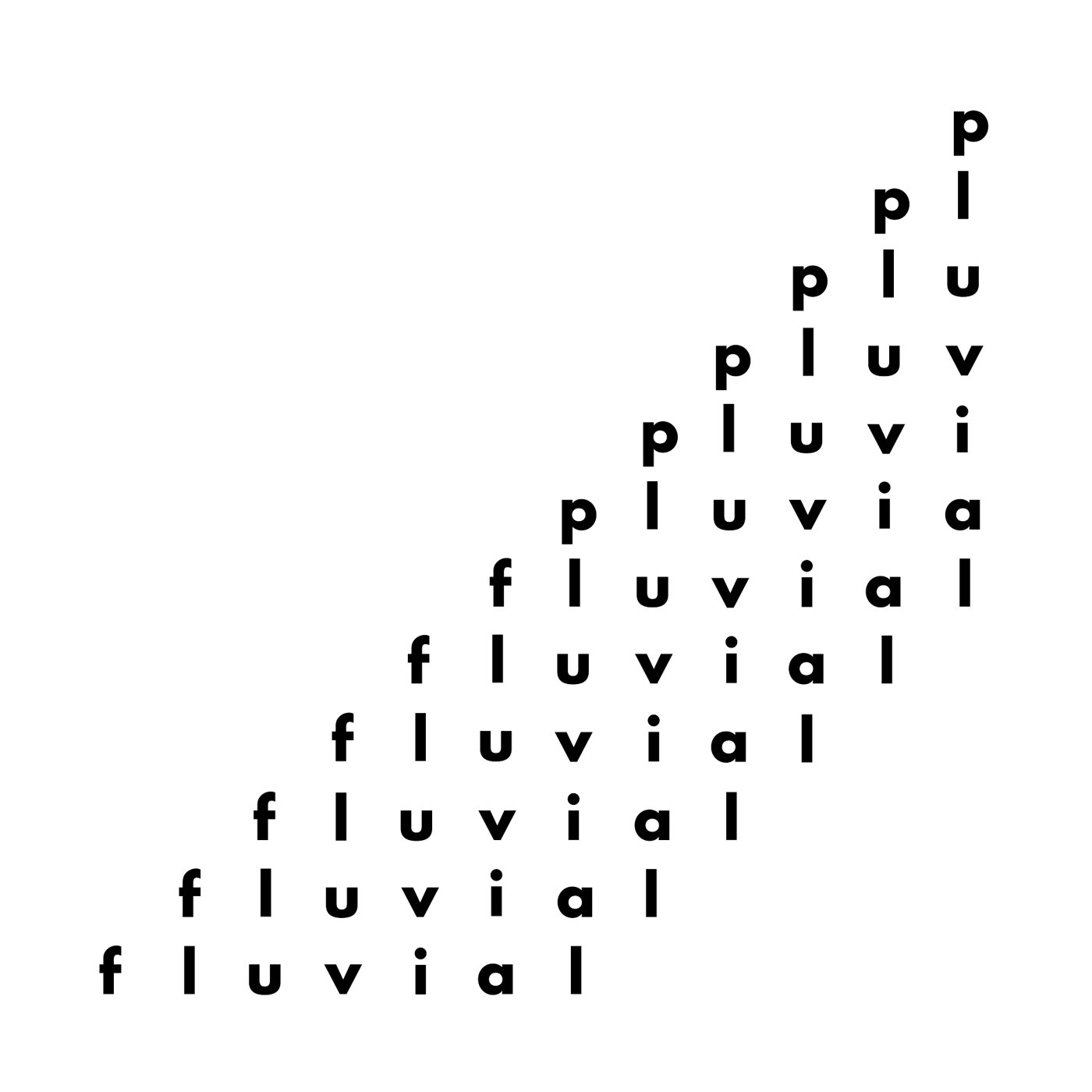
Augusto de Campos
Pluvial, 1959
Reproducción en vinil sobre pared
410 x 410 cm
Cortesía del artista y de Luciana Brito Galeria
English
Augusto de Campos
Pluvial, 1959
Vinyl reproduction on wall
410 x 410 cm
Courtesy of the artist and Luciana Brito Galeria
Esta exposición, de carácter internacional, tiene como asunto principal la lengua, los lenguajes, los idiomas, lo escrito, lo hablado y lo que hay que decir.
El pueblo maya —como muchas otras culturas— desarrolló un elaborado sistema de representación del lenguaje oral, labrado en piedras que resistieron la destrucción y el saqueo desde el período colonial. Las personas que “escribían” el devenir —el cielo, la noche, el jaguar y el cosmos— muy probablemente eran sacerdotes o intérpretes, más que artistas. En otras latitudes les llamarían de otras maneras: tlacuilos, chamanes, hermeneutas, magos, profetas, médicos.
Han sido las personas que todavía hablan maya —y muchas otras, nuevamente— quienes han logrado la supervivencia de su lengua, a pesar de los esfuerzos denodados de una voluntad nacional monolítica que, con una imposición ha intentado arrasar con la diversidad cultural y lingüística, por la necesidad de consolidar el Estado que hoy conocemos como México. Y esto también sigue sucediendo en muchos otros lugares.
Como el artista francés Robert Fillliou (con tres LLL) derivó en una posibilidad inusitada, llamando a su trabajo “economía poética”, o por otro lado, en palabras de la lingüista ayuujk Yásnaya Aguilar Gil “todo lo lingüístico es político” y no solamente en términos de las convenciones y paradigmas con los que conocemos y nos referimos a la realidad, sino también en los que existimos como individuos y como parte de una comunidad, de la sociedad y del universo.
El arte, en sus múltiples transformaciones y giros, se apropia de una diversidad gigantesca, casi monstruosa, de posibilidades de nombrar, transitando por otras disciplinas que permiten reconocernos —en nuestra riqueza y nuestra fragilidad humana— como seres múltiples y contradictorios.
La nomenclatura y los diccionarios son muy limitados —en comparación con la poesía, la música, la danza, las artes en general— para generar distintas y simultáneas formas de apelar a la naturaleza, por ejemplo. Sus hormas y convenciones son justamente eso, en cambio, las posibilidades creativas incluyen de por sí rupturas y fugas que recomponen lo que nos rodea al mencionarle.
Es también en estos casos, cuando en la ciencia, como fruto o proceso de largos debates y sesudas discusiones de expertos, que algo dejaría de llamarse de una manera (holoceno) para adoptar otra (antropoceno). Esas revoluciones en los paradigmas implicarían un enorme grado de creatividad política e indiscutible sensibilidad estética.
La invención de la perspectiva y de la visión en ventana no es lejana en el tiempo a la afirmación de un mundo tridimensional, no plano, junto a la hiriente y mordaz ironía de las rimas de Quevedo y los claroscuros de Caravaggio. O el “descubrimiento de América”.
Las obras y personas que participamos de la primera y renovada versión de esta bienal yucateca, haremos de ella una de inclusión y diversidad, de lenguas y lenguajes que dialogan y se contradicen, de palabras que, juntas, afirman la diferencia e imaginan otros posibles paisajes y maneras de existir en ellos colectivamente.
Como especula Salvador Xharicata, tal vez en lengua p’urhépecha: “Me han arrojado en todo esto. Nací en otro mundo y ya no puedo hablar su idioma”. En VOCAL afirmamos nuestra pertenencia a los lenguajes que, como herramientas discursivas, nos permitan enunciar en voz alta las necesidades y las preguntas que tengamos que exponer en público (publicarlas, hacer una exposición) en forma de obras de arte (esculturas, poemas, instalaciones, sinfonías, performances, murales, videos, dibujos ¡una milpa!) que también trasciendan sus límites disciplinarios, sus fronteras ‘nacionales’, los corsés ideológicos y las barreras geográficas.
En su poema concreto Pluvial (1959) Augusto de Campos da forma con palabras al flujo que quisiéramos pertenecer estética y políticamente, como algo que cae del cielo y se asienta en el cenote, pero que también se evapora y se diluye, que toma otras dimensiones, terciarias y cuaternarias, más que binarias, y se multiplica geométricamente en nuevos lectores, en puritita futuridad, cuando lo bebemos.
Abraham Cruzvillegas
English
Bienal de Yucatán 2026 Statement
This international exhibition focuses on language, the written word, the spoken word, and what needs to be said
The Maya people —like many other cultures— developed an elaborate system for representing oral language, carved into stones that have withstood destruction and looting since the colonial period. The people who “wrote” about the unfolding of events —the sky, the night, the jaguar, and the cosmos— were most likely priests or interpreters, rather than artists. In other parts of the world, they might be called by other names: tlacuilos, shamans, hermeneuts, magicians, prophets, healers.
It has been the people who still speak Maya —and many others, once again— who have ensured the survival of their language, despite the relentless efforts of a monolithic national will that, through imposition, has sought to wipe out cultural and linguistic diversity in order to consolidate the state we know today as Mexico. And this continues to happen in many other places as well.
Just as the French artist Robert Fillliou (with three LLL´s) arrived at an unusual possibility, calling his work “poetic economy,” or, on the other hand, in the words of the Ayuujk linguist Yásnaya Aguilar Gil, “everything linguistic is political”—not only in terms of the conventions and paradigms through which we understand and refer to reality, but also in terms of how we exist as individuals and as part of a community, society, and the universe.
Art, in its myriad transformations and twists, draws upon a vast, almost monstrous diversity of possibilities for naming, traversing other disciplines that allow us to recognize ourselves —in our richness and our human fragility— as multifaceted and contradictory beings.
Nomenclature and dictionaries are very limited —compared to poetry, music, dance, and the arts in general— in their ability to generate distinct and simultaneous ways of addressing nature, for example. Their forms and conventions are precisely that; in contrast, creative possibilities inherently include ruptures and deviations that reconfigure what surrounds us simply by naming it.
It is also in these cases —when, in science, as the result or outcome of lengthy debates and thoughtful discussions among experts— that something would cease to be called one thing (Holocene) and adopt another (Anthropocene). Such paradigm shifts would entail an enormous degree of political creativity and undeniable aesthetic sensitivity.
The invention of perspective and the window-like view is not far removed in time from the affirmation of a three-dimensional, non-flat world, alongside the stinging and biting irony of Quevedo’s rhymes and Caravaggio’s chiaroscuro. Or the “Discovery of the Americas”.
The works and people participating in the first, renewed edition of this Yucatecan biennial will make it an event of inclusion and diversity, of languages and discourses that engage in dialogue and contradict one another, of words that together affirm difference and imagine other possible landscapes, and other ways of existing within them collectively.
As Salvador Xharicata speculates, perhaps in the P’urhépecha language: “I’ve been thrown into all of this. I was born in another world, and I can no longer speak its language.” At VOCAL, we take the liberty of affirming our connection to languages that, as discursive tools, allow us to voice aloud the needs and questions we must present in public (to publish them, to present them) in the form of works of art (sculptures, poems, installations, symphonies, performances, murals, videos, drawings— even a cornfield!) that also transcend disciplinary boundaries, “national” borders, ideological constraints, and geographical barriers.
In his concrete poem Pluvial (1959), Augusto de Campos gives form with words to the flow to which we would like to belong aesthetically and politically —as something that falls from the sky and settles in the cenote, but that also evaporates and dilutes, taking on other dimensions— tertiary and quaternary rather than binary and multiplies geometrically in new readers, in pure futurity, when we drink it.
Abraham Cruzvillegas